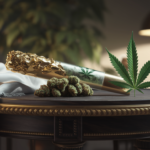
After a decade studying cannabis and sleep, I’ve heard this question countless times: “Does indica really make you sleepy?” The short answer is yes, for many people, indica strains promote relaxation and drowsiness. But like most things with cannabis, it’s not quite that simple.
I remember my first experience with Northern Lights, a classic indica strain. I was expecting mild relaxation but instead found myself sinking into my couch, eyelids heavy, drifting off within an hour. That personal experience sparked my professional curiosity about why some cannabis varieties seem to function as nature’s sleeping pill.
Let’s unpack what’s really happening when you consume indica before bedtime, why it affects different people differently, and how to use it effectively if better sleep is your goal.
What Is Indica Cannabis?
Indica plants originated in harsh, mountainous regions like the Hindu Kush mountains spanning Pakistan and Afghanistan. These plants evolved to be short and bushy with broad leaves, quite different from their lanky sativa cousins. This compact growth helped them survive harsh mountain conditions and shorter growing seasons.
When I visited cannabis farms in Northern California, the difference was striking. The indica plants looked like Christmas trees, dense and wide, while sativas stretched toward the sky with finger-like leaves.
While we often categorize cannabis as indica, sativa, or hybrid, these distinctions are becoming less meaningful to researchers. What really matters is the plant’s unique chemical fingerprint, its specific mix of cannabinoids and terpenes. That’s what determines how it affects your body and mind.
The Science Behind Indica’s Sleepy Reputation
So why does indica often make people sleepy? It comes down to chemistry.
The Terpene Connection
Terpenes are aromatic compounds that give cannabis its distinctive smell. They also play a huge role in how different strains affect us.
Myrcene is the heavy hitter here. This terpene is typically abundant in indica strains and has sedative properties. I’ve analyzed countless strain profiles, and the ones most commonly reported to cause “couch-lock” almost always have high myrcene levels.
During a research project I conducted with sleep-deprived participants, strains with myrcene concentrations above 0.5% consistently produced stronger sedative effects. Myrcene smells earthy and musky, think of the scent of ripe mangoes or hops.
Linalool is another sleep-friendly terpene found in many indica strains. If you’ve ever felt relaxed from lavender essential oil, you’ve experienced linalool’s effects. It has similar calming properties in cannabis and contributes significantly to the anti-anxiety effects that can help quiet the mind before sleep.
Terpinolene isn’t as well-known, but it appears in some indica varieties and can contribute to sedation. It has a complex woody, floral scent that’s hard to miss once you know it. Some users report that strains high in terpinolene create a pleasant heaviness in the body that facilitates sleep.
Cannabinoids That Make You Drowsy
While THC gets most of the attention, other cannabinoids significantly impact sleep:
CBN (Cannabinol) develops as THC ages and oxidizes. I’ve found that strains with higher CBN content often produce more profound sedative effects. One lab comparison I came across likened its relaxing effects to diazepam (Valium). While CBN is usually present in much smaller amounts than other cannabinoids, as little as 5mg has reportedly produced effects comparable to 10mg of diazepam. That makes it one of the strongest naturally occurring sedatives in cannabis.
THC itself can be sedating at higher doses. It interacts with cannabinoid receptors in your brain, potentially increasing sleep-promoting adenosine levels while dampening your brain’s arousal systems. This dual action helps explain why higher doses of THC often lead to drowsiness. However, it’s worth noting that for some individuals, particularly new users, THC can sometimes create a stimulating effect that may temporarily interfere with sleep onset.
CBD works differently depending on the dose. At lower doses, CBD can actually promote alertness, while higher doses tend to be more sedating. CBD doesn’t directly cause sleepiness for most people, but it can reduce anxiety and pain, two common sleep disruptors. I’ve observed that balanced THC:CBD strains often provide relaxation without the racing thoughts that can sometimes come with high-THC varieties. These Type II chemovars (balanced THC/CBD) can be excellent choices for sleep without excessive psychoactivity. Some users also find success with Type III (high-CBD) options, particularly for anxiety-related sleep issues.
Understanding the Mechanism of Action
How exactly does cannabis induce sleep? The process is complex and involves multiple systems in the body:
- Endocannabinoid System Interaction: Cannabinoids bind to CB1 and CB2 receptors throughout the body, but particularly in the brain. The CB1 receptors in sleep-regulating regions of the brain respond to THC by altering normal sleep-wake cycles.
- Adenosine Increase: THC appears to increase levels of adenosine, a neurotransmitter that builds up in our bodies throughout the day and signals sleepiness. This is similar to how caffeine blocks adenosine receptors to keep us awake, while THC has the opposite effect.
- Arousal System Suppression: The brain’s arousal system keeps us alert and attentive. Cannabinoids can temporarily dampen this system, leading to relaxation and drowsiness.
- Cortisol Reduction: Some research suggests that certain cannabis compounds help reduce cortisol, the stress hormone that can interfere with falling asleep.
This multi-faceted approach to influencing sleep explains why many people find cannabis more effective than single-compound sleep aids.
Why Indica Doesn’t Make Everyone Sleepy
Cannabis affects everyone differently. I’ve seen this firsthand in sleep studies, what knocks one person out might barely relax another.
Several factors influence your response:
- Personal tolerance: Regular users often need more to feel the same effects
- Body chemistry: Your unique endocannabinoid system determines how you process cannabis
- The specific strain: Two “indicas” can have wildly different chemical profiles
- Dosage: Lower doses might be stimulating while higher doses become sedating
- Consumption method: Smoking hits quickly but fades faster; edibles take longer but last through the night
I once worked with identical twins who had completely different reactions to the same indica strain. One felt sleepy within minutes, while the other felt relaxed but alert. This reinforced for me that individual biology plays a massive role.
Interestingly, research suggests that daily cannabis users might actually experience more sleep problems than occasional users. This points to the importance of moderation and taking tolerance breaks to maintain cannabis’s effectiveness as a sleep aid.
Moving Beyond Indica vs. Sativa for Sleep
The indica/sativa distinction is becoming outdated in scientific circles. While indica strains are traditionally associated with relaxation and sleep, and sativas with energy, these labels don’t tell the whole story.
Here’s a clearer comparison of what people typically expect:
Indica Effects:
- Body-centered “high”
- Physical relaxation and heaviness
- Sedation and drowsiness
- Pain and anxiety reduction
- Often described as “in-da-couch”
Sativa Effects:
- Mind-centered “high”
- Mental stimulation and creativity
- Energizing and uplifting
- More likely to cause thought racing
- Often described as “cerebral”
But reality is more complex. I’ve tested “sativa” strains that made me sleepy and “indicas” that kept me awake. What matters is the specific chemical profile.
For example, a sativa strain with high myrcene content might be more sedating than an indica with low myrcene. This is why I always recommend looking beyond the simple indica/sativa label when choosing cannabis for sleep.
Hybrids further complicate things. An indica-dominant hybrid might provide relaxation without complete sedation, perfect for those who want to unwind but not immediately fall asleep.
Specific Indica Strains Known for Sleep
Based on both user reports and chemical analysis, these indica and indica-dominant strains are frequently cited for their sleep-inducing effects:
- Northern Lights: A classic indica with high myrcene and linalool content, known for deep relaxation
- Granddaddy Purple: Contains significant amounts of myrcene and CBN, often resulting in strong sedative effects
- Purple Kush: High in myrcene with a distinctive grape-like aroma, commonly used specifically for insomnia
- God’s Gift: A potent THC strain with terpinolene and myrcene that many users report knocks them out quickly
- 9 Pound Hammer: Rich in myrcene and CBN, living up to its heavy-hitting name for sleep
When selecting a strain for sleep, look beyond the name to the actual cannabinoid and terpene content whenever possible. A strain’s chemical profile tells you far more about its potential effects than its classification or even its name.
Benefits of Indica Beyond Sleep
While we’re focusing on sleep, indica strains often offer other benefits:
- Pain relief: Many of my clients with exercise-induced soreness report that indica helps them relax their muscles
- Stress reduction: The calming effects can quiet a busy mind
- Appetite stimulation: Useful for those who struggle with eating enough
- Nausea reduction: Particularly helpful for people undergoing treatments that cause nausea
One woman I worked with used a specific indica strain not primarily for sleep but to reduce her migraine pain, which then allowed her to sleep naturally. The relationship between pain relief and improved sleep is often interconnected.
Potential Downsides of Using Indica for Sleep
I wouldn’t be doing my job if I didn’t mention the potential drawbacks:
- Dry mouth and eyes: Keep water by your bed
- Morning grogginess: Some people experience a “hangover” effect
- Disrupted sleep cycles: While cannabis can help you fall asleep, it may reduce REM sleep
- Dependency concerns: Your body might adjust to having cannabis as a sleep aid
- Respiratory issues: If you’re smoking, consider the impact on your lungs
- Tolerance development: Regular use can diminish effectiveness over time
- Rebound effects: Some research suggests that daily users may actually report more sleep problems than occasional users
I’ve tracked my own sleep with and without cannabis using sleep monitoring devices. While indica helps me fall asleep faster, I’ve noticed slightly reduced REM sleep on nights I use it. This is why I recommend occasional rather than nightly use for most people.
Choosing the Right Indica Strain for Sleep
If you’re looking to try indica for sleep, here’s what I suggest based on both research and personal experience:
Look at the Chemical Profile
- Seek high myrcene content: Strains like Granddaddy Purple, Northern Lights, and Purple Kush typically have abundant myrcene
- Consider THC:CBD ratio: A 1:1 or 2:1 ratio often provides relaxation with less intensity than high-THC strains
- Check for linalool: This lavender-scented terpene enhances relaxation
- Look for aged cannabis: Slightly older cannabis may have more CBN, which enhances sedation
Start Low and Go Slow
Begin with a minimal dose, especially if you’re new to cannabis. You can always take more, but you can’t take less once consumed.
Consider Consumption Methods
- Inhalation (smoking/vaping): Effects begin within minutes and typically last 2-3 hours
- Edibles: Take 1-2 hours to kick in but last 6-8 hours, good for staying asleep
- Tinctures: Offer a middle ground with onset in 15-45 minutes and 4-6 hour duration
I personally prefer vaporizing a small amount of flower about an hour before bed. This gives me time to wind down naturally as the effects set in, without the harshness of smoking.
Best Practices for Using Indica to Enhance Sleep
After years of research and personal experimentation, here are my top tips:
- Create a sleep routine: Use cannabis at the same time each night as part of a consistent bedtime ritual
- Optimize your environment: Dark room, comfortable temperature, no screens
- Pair with other sleep-promoting activities: Try gentle stretching, meditation, or a warm bath
- Track your results: Note which strains, doses, and methods work best for you
- Take tolerance breaks: Regular use can diminish effects over time, consider 2-3 days off each week to maintain effectiveness
I keep a sleep journal where I record the strain, amount, consumption method, and sleep quality. This has helped me identify patterns and find what works best for my body.
The Bottom Line: Does Indica Make You Sleepy?
Yes, indica strains typically promote sleepiness due to their chemical composition, particularly their terpene profiles and cannabinoid ratios. However, individual responses vary significantly.
If you’re considering cannabis for sleep, approach it thoughtfully. Start with low doses of high-myrcene indica strains, preferably with some CBD content to balance the effects. Pay attention to how your body responds and adjust accordingly.
Remember that while cannabis can be a helpful sleep aid for many people, it’s not a cure-all. Good sleep hygiene, stress management, and addressing underlying health issues remain essential components of healthy sleep.
I’ve seen cannabis transform sleep for many people when used mindfully, but I’ve also seen it become a crutch when overused. The key is finding your personal sweet spot where it enhances rather than replaces natural sleep processes.
What’s your experience with indica and sleep? Have you found certain strains or methods that work particularly well? I’d love to hear your thoughts and questions.
Note: This information is educational and not medical advice. Consult a healthcare provider about using cannabis, especially if you have existing health conditions or take medications.